
The forest I am looking at doesn’t contain Unicorns. They will not be showing up here anytime soon. I’m ok with that. Because if we keep doing things right, for the right reasons, like we have for the past 45 years, we’ll remain at a healthy and respectful place in the food chain. I can see it.
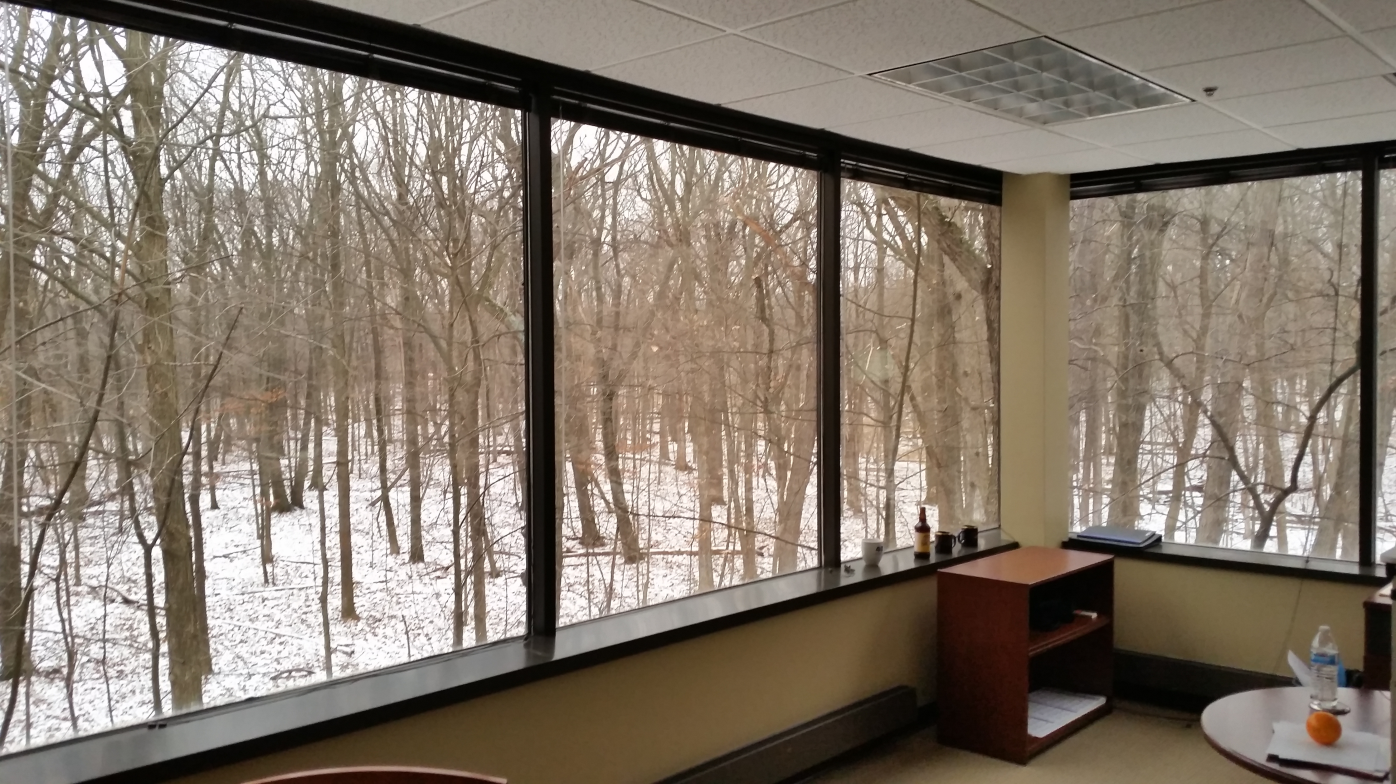
The other morning I was standing in the office of our software company looking out the windows at all the trees. It was dark, cold, the trees were barren, and the thought came to my mind, “Can you see the forest through the trees?” An expression we’ve all heard before, “Can you see the forest through the trees?” I’m standing there thinking, “Really? What the heck does that even mean?” And just in that moment, the clouds broke and the sun lit up the whole forest.
The snow was glistening and bright. There was evidence of animal tracks from the previous day. A squirrel danced across the frozen stream, there were fallen trees and broken branches, but the forest was very much alive with depth and definition, and history and meaning and purpose. There was evidence of a meaningful past and yet there was so much left to imagine for the future. A vision of what’s coming next.
SaaS, Cloud, IoT, IaaS, VR, AR, MBL, AI, Blockchain, inhabiting Mars…
Suddenly I noticed something dashing across the terrain. A Unicorn? Nope, it was a gray wolf. A Unicorn is an ungulate and doesn’t do so well in a forest full of wolves. Wolves need only to worry about humans, and probably tigers I’d guess.
The forest I am looking at doesn’t contain Unicorns. They will not be showing up here anytime soon. I’m ok with that. Because if we keep doing things right, for the right reasons, like we have for the past 45 years, we’ll remain at a healthy and respectful place in the food chain. I can see it.
Software on your terms. For humans, by humans…and some bots.
Related Posts
Gold Silver or Bronze
Written by Tim Dunn, "what makes your product or service different or better than your competitors?".
Finding the Right Answer
Written by Tim Dunn There is another dimension often overlooked. Culture. Great company culture, not as defined by you and your employees but as defined by your customers, business partners, and competitors.
Services as a Service (3/3)
Written by Tim Dunn, "How wonderful it would be to improve, optimize, and introduce efficiency and expediency of processes through better utilization of the software you purchased from the solution provider that understands it’s all about you."
Address:
- 13555 Bishop's Court
- Suite 300
- Brookfield, WI 53005
Telephone:
- Company 800: (800)-225-0585
- Company Local: (262)-784-9099
- Sales: (262)-754-2810
- Fax: (262)-784-5994